Attics with ductwork running through
When your heating and cooling ducts run through the attic, foam on the underside of the roof puts them on the warm side of the house, and that's where foam usually beats loose fill.
Drafty rooms and a hot upstairs usually mean air is getting through the gaps, and foam seals those gaps while it insulates.
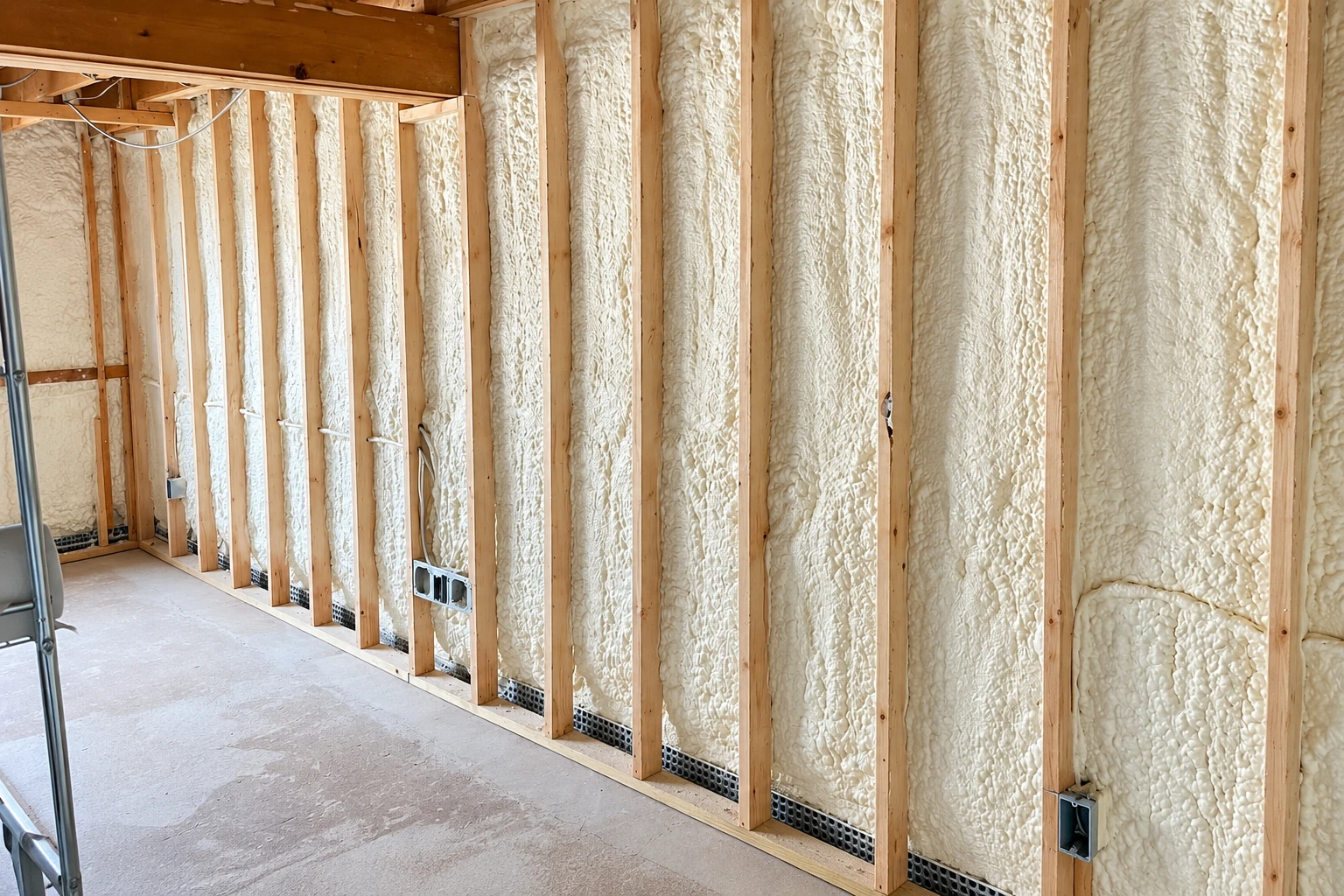
Spray foam insulation is foam our crew sprays onto the rafters, walls or crawl space framing of your Altoona house, where it expands into the gaps, stops drafts and slows heat moving in or out.
Most of the calls I get come from older houses with cold floors, a drafty room or a power bill that climbs every winter. Your price turns on how much area we're covering, how thick the foam goes, whether it's open-cell or closed-cell, and whether old insulation or a roof leak has to be dealt with first. The schedule turns mostly on a date when your household can be out of the house, and your own figure comes from me looking at the space in person.
Foam laid over a roof leak, a wet wall or old insulation full of droppings doesn't do what you paid for, so we deal with those before anyone sprays.
We've been at this full time since 2020, and I learned it one house at a time in attics, crawl spaces and basements, mostly in older homes.
We're based in Altoona and work in Hollidaysburg, Tyrone, Park Forest Village and other cities around them, so we know the older houses and drafty rooms we usually meet here.
Before any foam job, we talk through who in the house has asthma or allergies and where everyone will stay while it goes in, so the date we pick works for your family. I come out first and climb up to see what's there now, how many inches are already down, whether it's soaked or full of droppings, and whether the roof above has been leaking, because foam sprayed over a wet or dirty mess keeps the problem. Anything that has to come out comes out before we spray. On the day, our crew covers what needs protecting, sprays the foam out to the edges as full as it is in the middle, keeps the eave vents clear when the attic stays vented, and cleans up. Once you're back in, I walk through the finished work with you.
Foam isn't always the right call. It costs more and seals air while it insulates, which pays off when your ductwork runs through the attic. If it doesn't, sealing the gaps around can lights, pipes and the hatch and then topping up with blown-in insulation, loose fill blown through a hose, usually gets you there for less, and I'll tell you so at the estimate. Our attic insulation work covers that whole side of the job.
When your heating and cooling ducts run through the attic, foam on the underside of the roof puts them on the warm side of the house, and that's where foam usually beats loose fill.
That room runs cold in winter and hot in summer because it sits over an unheated garage. Foam fills the odd framing and closes gaps that loose fill can't reach.
Cold floors usually mean outside air is moving under the house. Foam on the crawl space walls and along the top of the foundation seals those leaks and insulates at once.
Metal walls and roofs sweat and swing hard with the weather. Foam sticks right to the panels and closes the seams, which is why shop and metal building owners call us for it.
Send the form and we'll get back to you within one business day to set a time. I come out, look at the space and give you a free estimate, with no obligation.
I come out myself and climb into the attic or crawl space to see what's there before I put a number on it, so the estimate fits your house.
I'll show you where each type of foam fits in your house and why, so you can weigh the cost against what you get before you decide anything.
Our crew does the install, and I walk through the finished work with you so you can see the coverage at the edges and around the hatch yourself.
These photos show foam, loose fill and attic layouts you might weigh, and we can talk through which one fits your house at the estimate.
Here are the questions Altoona homeowners ask most before spray foam goes in, from cost and foam type to how long you're out of the house.
Spray foam in Altoona usually runs about $1,800 to $4,400 for 1,000 square feet at 3 inches thick, according to a local cost guide from 2022. Open-cell costs less than closed-cell, and the size of the area, the depth and any cleanup or repairs first move your number. Our work is backed by our satisfaction guarantee.
Use closed-cell where the foam has to hold back moisture, and open-cell where cost and quiet rooms matter more. Closed-cell foam, the dense kind that blocks moisture, insulates about twice as well per inch. Open-cell costs less and stops sound much better, but it lets moisture pass, so it can't do that job.
Plan on at least 24 hours away, because national consumer safety guidance says everyone living there should leave for at least that long. Anyone with asthma, respiratory allergies, skin conditions or a past reaction to isocyanates, a chemical used to make the foam, should read the product information carefully, which is why we settle that and the date with you first.
Pennsylvania's building code says the owner, or someone authorized to act for them, has to get a building permit before construction work, and the state says some contractor rules can only be checked with the City of Altoona. We check with the local code office before we start and go over it with you. If a permit's needed, we work with you to have it in place first.
Most don't, because Pennsylvania has no license for most construction contractors, but most home improvement contractors have to register with the Pennsylvania Attorney General's Office. State law also requires them to carry minimum insurance and use contracts that meet its consumer protection rules. We're licensed and fully insured.
It can go there, and it changes how the attic works. When a vented attic becomes a sealed, conditioned one, it needs a way to get moisture out. Some foams also need a covering such as a coating or drywall when the product or code calls for it, so the foam you pick can change the job.
Have the area you want insulated, its rough size and anyone's health concerns in mind when you call (814) 369-6056 or send the form.