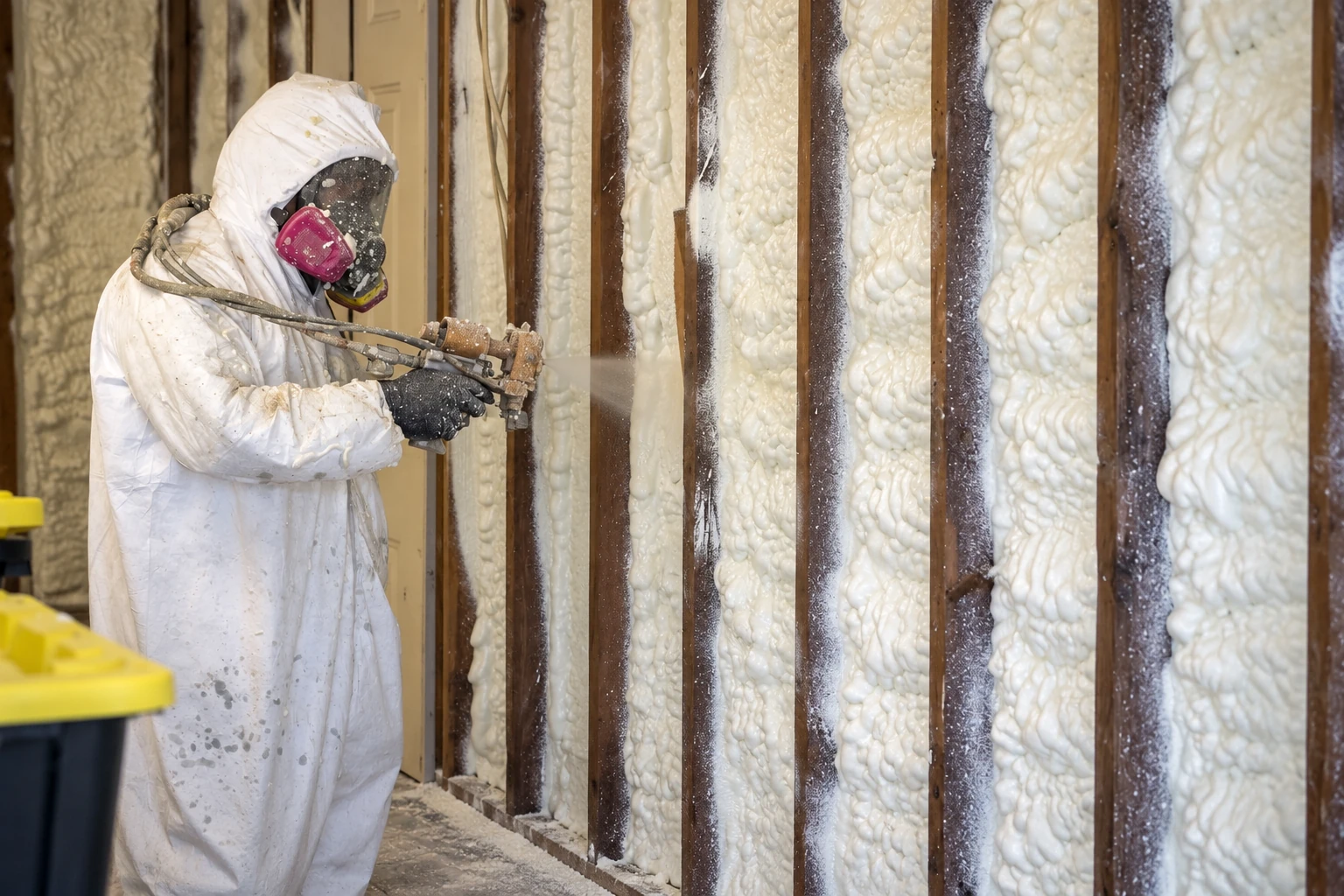
Spray foam insulation
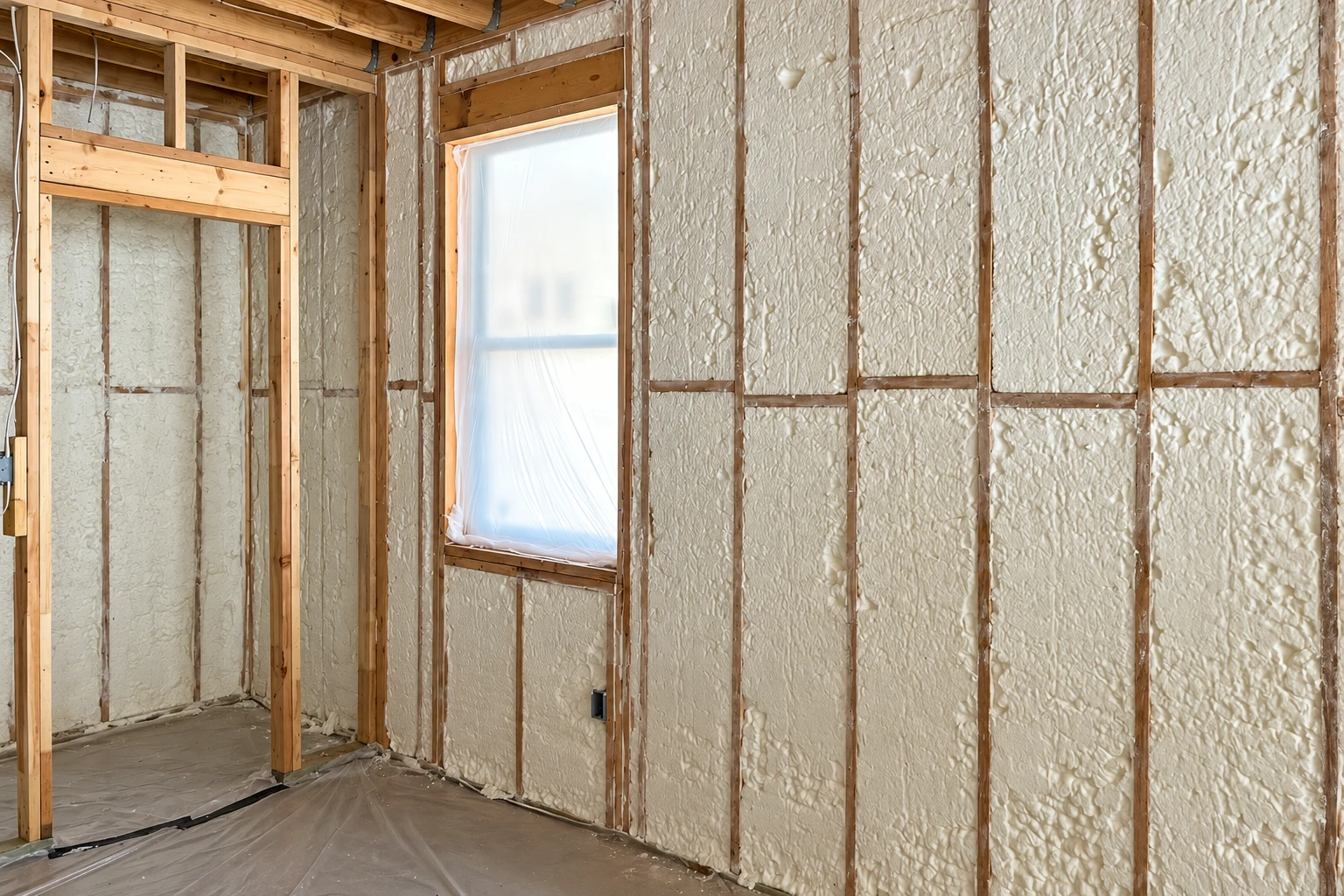
Foam fills gaps as it goes on, so it seals air while it insulates. We use it on rooflines, basement walls and metal buildings where loose fill can't stay put.
Heritage Altoona Spray Foam Insulation is an insulation contractor based in Altoona, PA that works in Park Forest Village homes, sealing air leaks and insulating attics, walls, crawl spaces and basements so drafty rooms and cold floors ease up.
Park Forest Village started going up in 1956 as the first large suburban neighborhood near State College, laid out on curving streets with the trees left standing. It sits partly in Patton Township and partly in Ferguson Township, so if you're not sure which side of the line your house is on, Patton Township or Ferguson Township can confirm it for your address.
We come over from Altoona and do the same work in Hollidaysburg and Tyrone. What moves the price here is how much is already in your attic and what shape it's in, how much sealing the gaps take, whether old material has to come out, and whether foam or loose fill suits the house. The schedule turns mostly on whether anything has to come out first and whether the job needs a permit, and I'll give you your own figure once I've been up there. In houses going back to the late 1950s, insulation that's been in place since the house was built has had decades to settle, get wet or fill with droppings, and that decides whether we top it up or clear it out first.
I come out myself and look in the attic or crawl space before giving you a number, because the inches already there and their condition decide what your house needs.
We close the air leaks before any insulation goes in, because new insulation laid over open gaps only slows a draft instead of stopping it.
If a job isn't worth the money or isn't ours to do, I'll tell you at the estimate instead of selling you work your house doesn't need.
Foam fills gaps as it goes on, so it seals air while it insulates. We use it on rooflines, basement walls and metal buildings where loose fill can't stay put.
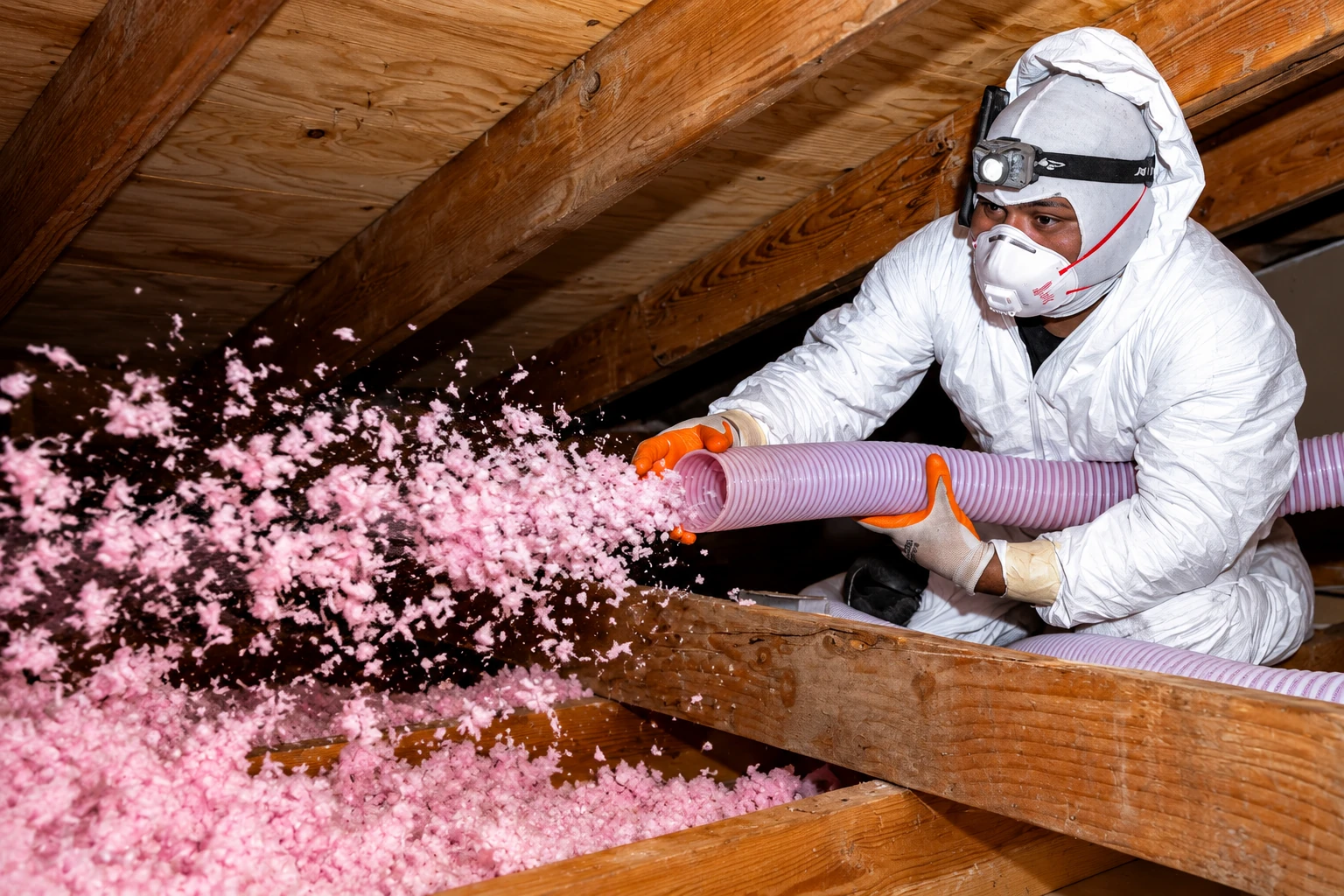
Plenty of attics here still have the thin layer they started with. We seal gaps first, keep the eave vents clear and fill the edges as deep as the middle.
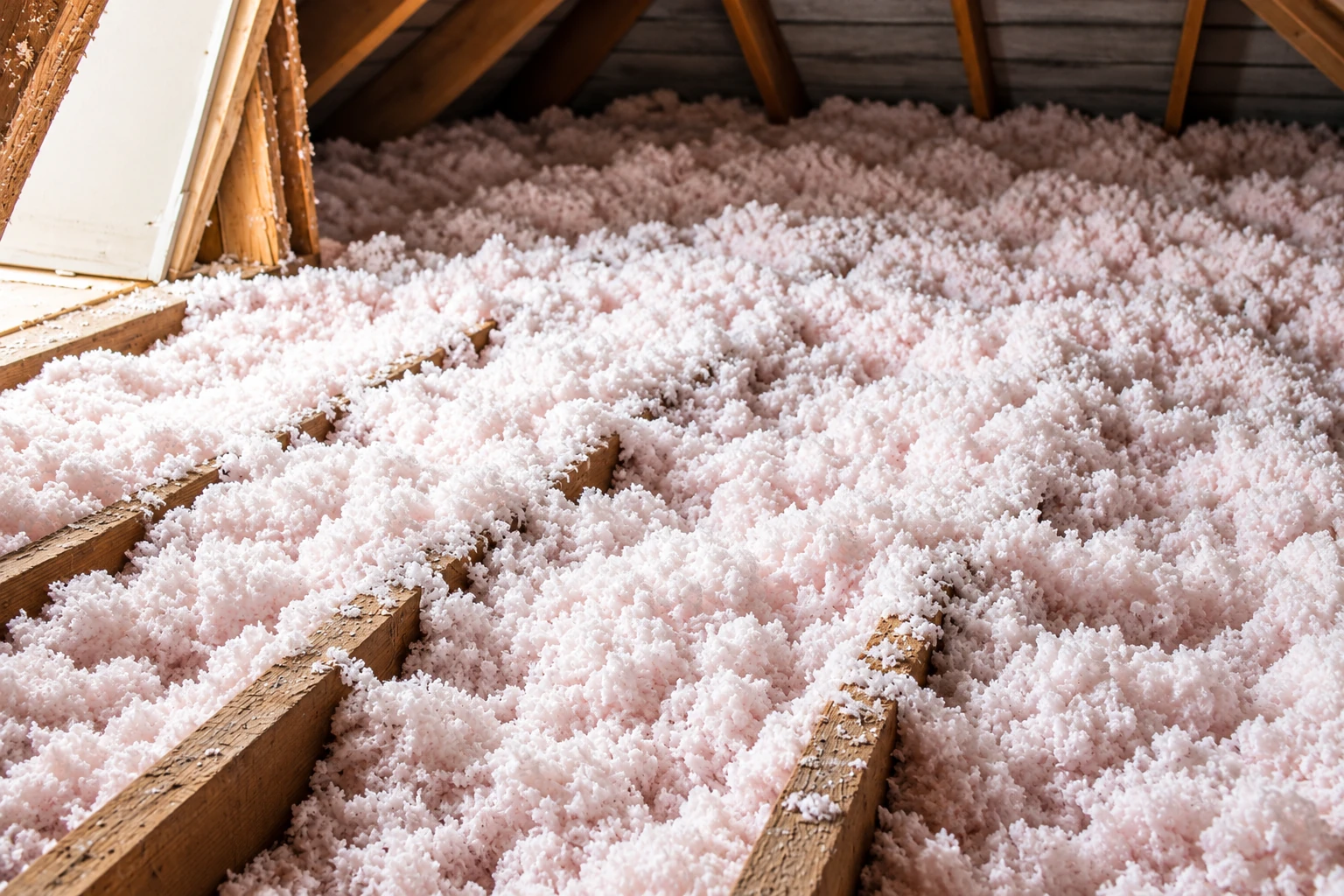
Blown-in insulation is loose fill sent through a hose, which lets us top up an attic over what's there when the old material is still dry and clean.
When the whole house feels drafty or the power bill climbs, I look at the attic, walls, floors and crawl space together and tell you which one to fix first.
Old insulation that got soaked or filled with droppings has to come out, because laying new material over it keeps the problem in your attic.
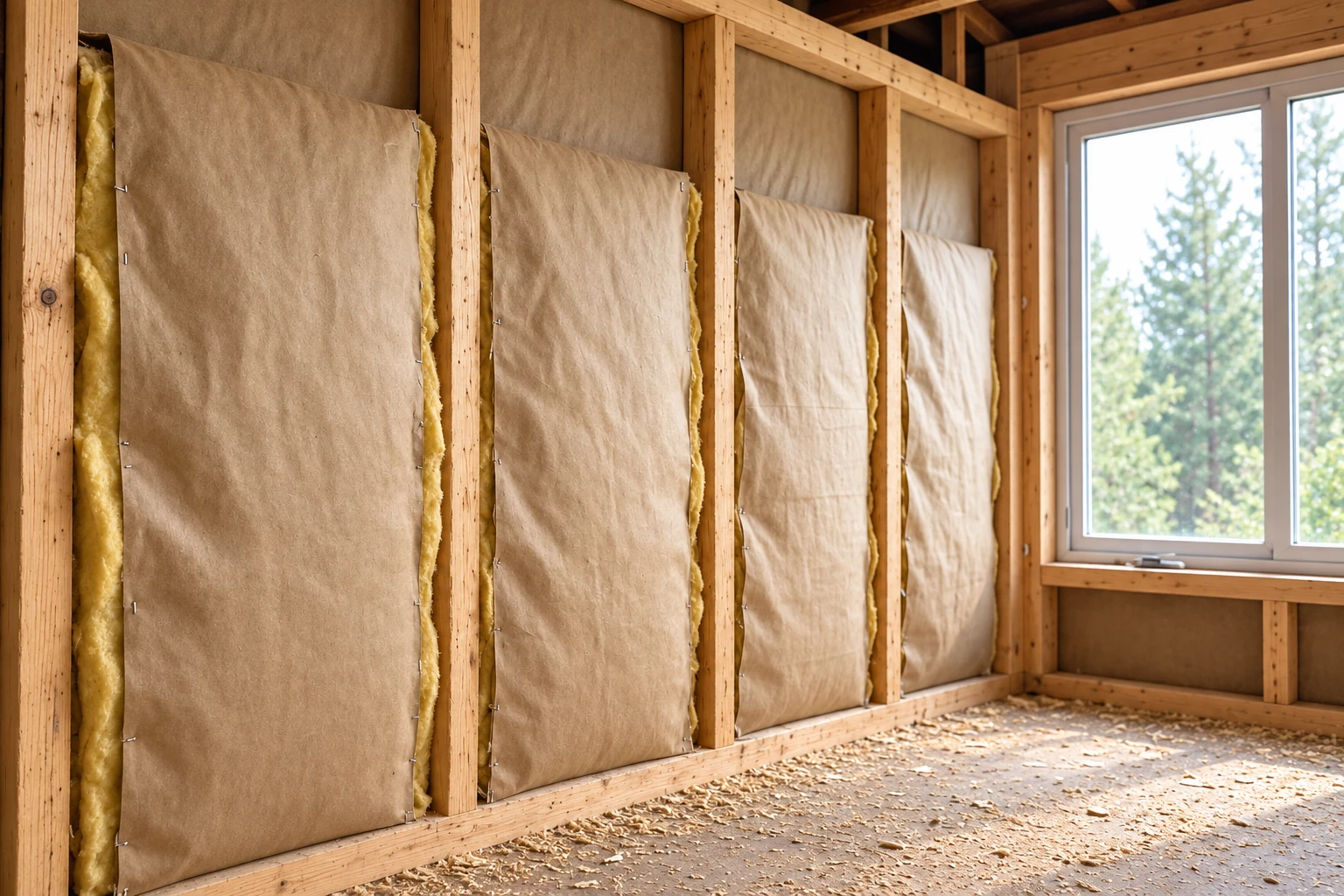
Cold floors over a crawl space usually trace to gaps at the top of the walls and old batts that sagged loose. We seal those first, then insulate.
Older walls are often empty or close to it. We fill them through small holes we patch afterward, so a drafty room gets warmer without tearing the walls open.
Drafts come in at outlets, plumbing holes, the top of basement walls and around the chimney. We find and close those gaps so heated air stays inside.
Bare basement walls let heat slip out all winter. We check for dampness first, because insulation on a wet wall traps the water instead of keeping you warm.
Closed-cell foam is dense foam that also blocks moisture, which makes it a good fit for crawl space walls, the top of basement walls and metal buildings.
Open-cell foam is softer and lighter, and it costs less than closed-cell. It seals air and quiets sound well, so it fits rooflines and interior walls that stay dry.
For shops and metal buildings, I look at how the space is used and heated, then match the insulation to it, including foam where bare steel sweats in cold weather.
A plastic sheet over a dirt crawl space floor keeps ground moisture out of the framing and insulation above. We tape the seams and run it up the walls.
In walls, basements and metal buildings, a vapor barrier has to go on the right side of the insulation, or it traps moisture where you can't see it.
Before we add anything up top, we close the gaps around can lights, pipes, wiring holes and the attic hatch, so warm air from the rooms below stays there.
We add insulation to finished houses by working through the attic, the crawl space and small wall openings, so you get warmer rooms without a remodel.
Send the form and we'll get back to you within one business day to set a time. I come out, look over the attic and whatever else is bothering you, and give you a free estimate with no obligation.
I walk you through what I found, what to fix first and what's driving the cost, so you can decide without anyone rushing you.
Once you decide to go ahead, our crew does the install, and I walk through the finished work with you so you can see what went where.
We're licensed and fully insured, and the work is backed by our satisfaction guarantee, so you know where you stand before anyone climbs into your attic.
These are the questions homeowners here ask before an attic, wall or crawl space job, answered the way I'd answer them in your driveway.
Ask the Centre Region Code Administration, which issues building permits for Patton and Ferguson townships and says to apply before any construction or remodeling work starts. We check with that office before we begin and go over what we learn with you, and if your job needs a permit, we work with you to have it in place first.
Usually, yes. Pennsylvania requires anyone who owns or runs a home improvement business, or does home improvements, to register with the Office of Attorney General, with a few exemptions, such as someone whose home improvement work comes to less than $5,000 in a calendar year. The state doesn't license most construction contractors, though it does certify contractors who remove asbestos or lead.
For blown-in insulation, usually not, because the crew works up in the attic and the mess stays there. Spray foam is different. Everyone, kids and pets included, stays out until the re-entry time has passed, which is the wait before you can come back inside, and I'll tell you what that is for your job before we schedule.
For most older houses, sealing the gaps and topping up with blown-in insulation is the better buy. Foam costs more because it seals air and insulates in one step, and that's worth paying for mainly when your ductwork runs through the attic. I'll tell you which one fits once I've been up there and seen it.
We're based in Altoona, PA and work in the cities linked here, plus others around them. If your address isn't listed, call or use the form and ask.
Call (814) 369-6056 any weekday until 10 PM or send the form, so setting up a look doesn't mean calling during your workday.