Attics with only a few inches
A lot of older homes have a thin, packed-down layer up top, and topping it up with loose fill is usually the simplest way to warm the rooms below.
Cold floors, drafty rooms and a thin layer up in the attic? We seal the gaps first, then fill every corner evenly.
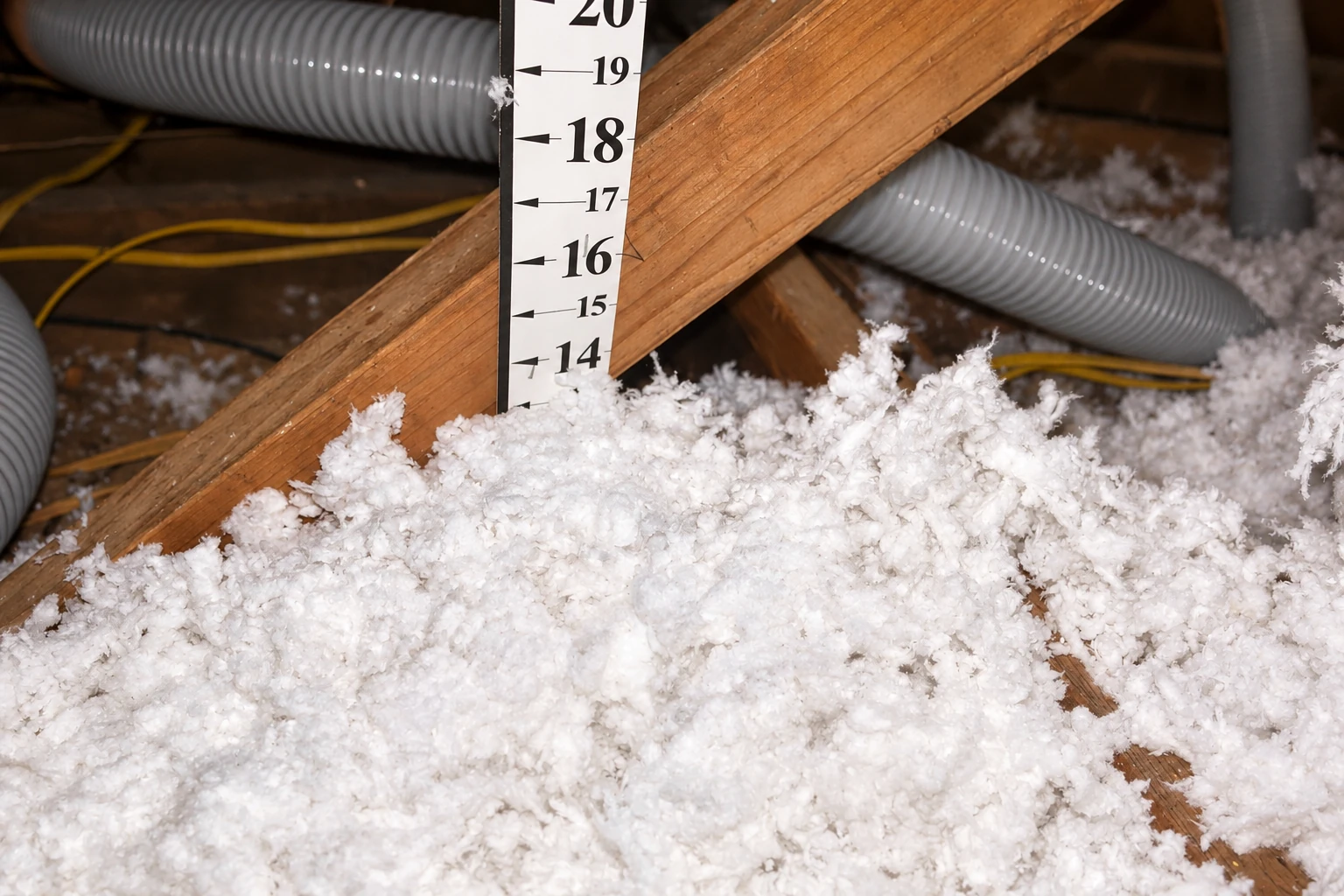
Blown-in insulation is loose fill, cellulose or fiberglass, blown through a hose onto your attic floor or into finished walls, and in older Altoona homes that have very little up there, it helps your ceiling and walls hold the heat in.
Most calls I get start with cold floors, a drafty upstairs or a power bill that climbs every winter, and when I climb into the attic there's often only a few inches of old material. The price moves with the size of the attic, how much is already there, whether old material has to come out first and how many gaps need sealing, and the schedule turns on that same prep plus anything the attic check turns up. Before we start, we check with your local code office about permits and go over what we learn with you, and for your own figure I come out and look.
I climb into your attic myself before I put a number on anything, because the inches already there and the shape of the framing decide what the job really needs.
If your attic already has enough, or the real fix is an electrician's or a roofer's job, I'll tell you that plainly instead of selling you work you don't need.
Most of our calls come from older homes in Altoona, Hollidaysburg, Tyrone, Park Forest Village and the cities around them, so thin attics and odd framing are familiar ground.
I start by climbing up and checking what's already there, because fresh material laid over old insulation that's soaked or full of droppings just keeps the problem in your attic. Our crew then does the air sealing, closing the gaps around can lights, pipes and the attic hatch, so the new layer isn't fighting a draft. Next we set baffles, guides at the roof edge, to keep the eave vents clear so the attic still breathes and moisture doesn't collect in the framing. Then we blow the loose fill into every corner and out to the edge of the ceiling, keeping it even instead of deep in the middle and thin at the edges, which is backward but common.
When the old layer is wet or dirty, we clear it out first with insulation removal so nothing new goes down on top of it. If the attic is only part of why the house feels cold, I'll look at the walls, floors and crawl space too as part of home insulation, so the work happens in the right order.
A lot of older homes have a thin, packed-down layer up top, and topping it up with loose fill is usually the simplest way to warm the rooms below.
Loose fill flows around joists, wiring and blocking and into shapes a batt can't follow, so it suits attics where the framing is crowded or hard to reach.
The same layer that holds heat in over the winter also slows the sun's heat coming down through the ceiling, so it's worth a look if the upstairs bakes in July.
Spray foam costs more but seals air while it insulates, so if your ductwork runs through the attic I'll usually point you that way. Otherwise, sealing and loose fill wins.
Send the form and we'll reply within one business day to set a time. Then I come out, climb up and look, and you get a free estimate with no obligation.
I'm the one who comes out, so the person measuring your attic and checking for old wiring is the same person who answers your questions about the price.
Once you decide to go ahead, our crew handles the sealing and the blowing, and when they're done I walk through the finished work with you.
The work is backed by our satisfaction guarantee, and the walkthrough at the end is your chance to look at the finished attic and ask about anything you see.
These example photos show loose fill depths, foam and attic layouts worth talking through when I come out to look at your house.
These are the questions Altoona homeowners ask most before blown-in goes into the attic or walls, answered plainly.
Usually, yes. With drill and fill, small holes go near the top of each wall cavity, the hollow inside the wall, from inside or outside, and each one is packed with blown-in insulation dense enough to resist settling. If your house was built before 1980, lead safety rules may apply depending on how much outside wall gets disturbed, so ask me how we'd handle yours.
Pennsylvania's Uniform Construction Code requires the property owner or someone authorized to act for them to get a building permit before beginning any construction or building work, and most municipalities enforce it locally. Rules differ between cities, boroughs and townships, so we check with your local code office, and if your job needs a permit, we work with you to have it in place before any work begins.
The insulation waits until those are dealt with. Active knob and tube wiring, an older wiring style, has to be replaced or properly boxed in first, and that's an electrician's job, not ours. If the old fill is vermiculite, which may contain asbestos, we stop work and talk through next steps with you, which is why I check the attic before we schedule anything.
Most home improvement contractors in Pennsylvania have to register with the Pennsylvania Attorney General's Office, carry minimum insurance and use contracts that meet consumer protection rules. Some municipalities add their own license rules, and the state keeps no record of those, so the municipality where the work happens is the place to ask. We're licensed and fully insured.
It can, as long as the ceiling gets sealed first. A sealed and insulated attic can help prevent ice dams, the ridges of ice that build up at the roof edge, and Blair County's climate is cool and humid. That's why we seal before we blow, and why it's worth asking any contractor whether their quote includes the sealing.
The price comes down to the size of your attic or walls, how many inches are already up there, whether old material has to come out first and how much sealing the ceiling needs. Tight access and a lot of wiring or framing to work around add time too. Once I've been up there, you get a figure for your house.
Call (814) 369-6056 or use the form, and tell me your home's age and any old wiring or vermiculite you know of, so I come prepared.