Poured concrete and block walls
Flat concrete and block take spray foam well, and foam boards can work too if they're stuck tight to the wall with every edge and seam sealed, since an air gap behind a board lets moisture sit.
Cold floors upstairs and a damp, chilly basement usually trace back to bare foundation walls. We insulate them with material that handles the moisture.
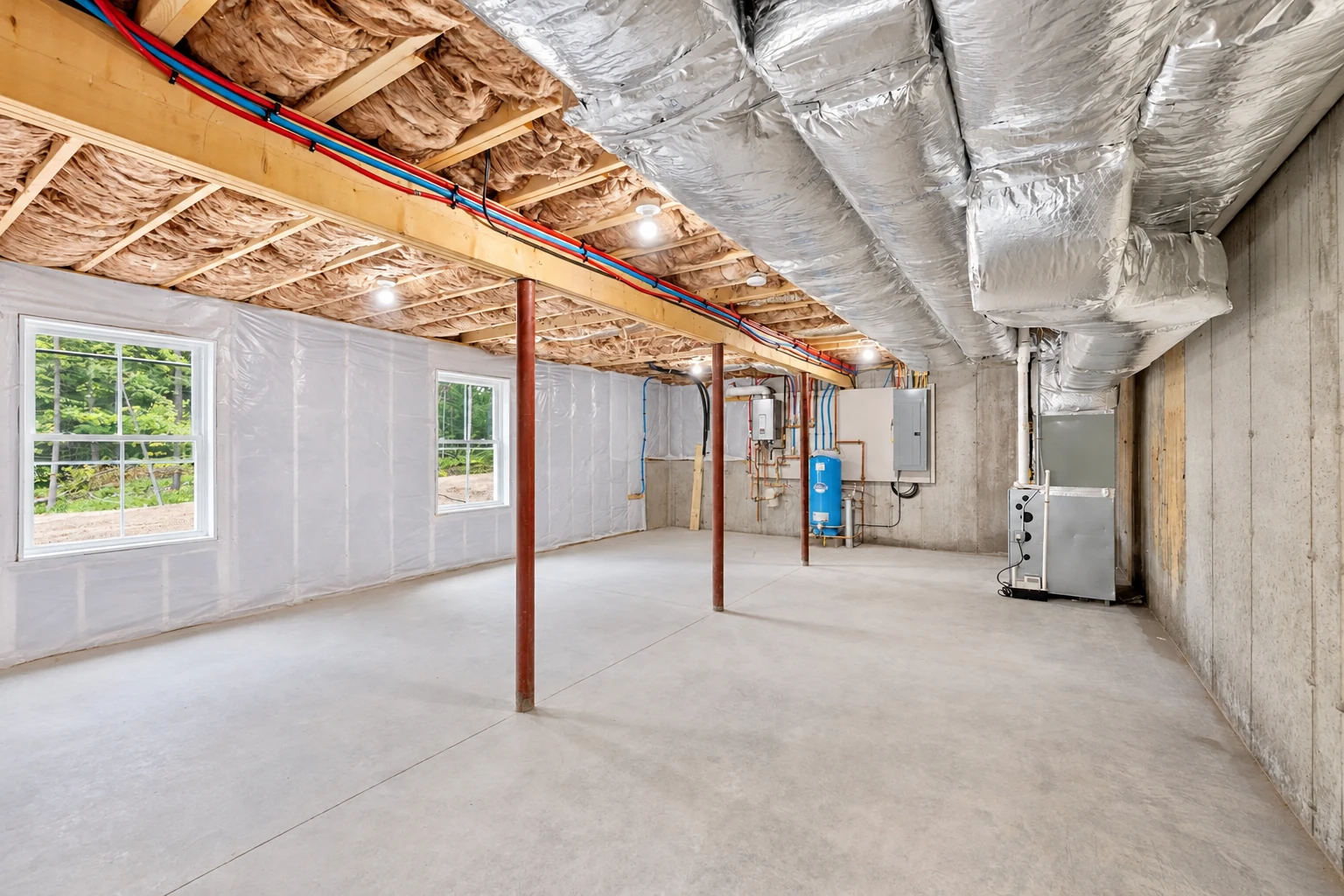
Basement insulation covers your foundation walls from the inside, and at Heritage Altoona Spray Foam Insulation we do it for houses in Altoona, PA so the basement holds its heat and the rooms above feel warmer underfoot. The outside of the wall is the better spot in theory, but on a house that's already built, digging it out rarely makes sense.
Most basement calls I get come from older houses around Altoona, Hollidaysburg, Tyrone and Park Forest Village, where the walls are bare block or stone, the floors upstairs run cold and the basement smells a little damp. The price mostly turns on how much wall there is, what it's made of, the shape the rim joist is in and which material the wall calls for, and the schedule turns on water, because a leak has to be dealt with before any insulation goes up. Since most cities, boroughs and townships in Pennsylvania enforce the state building code themselves, I check with your local code office before we start and go over what I learn with you. When I come out for the estimate, you'll get a figure for your own basement.
I'd rather tell you a wall isn't worth insulating yet, or that a fix isn't ours to do, than sell you work your basement doesn't need.
We're licensed and fully insured, and the work is backed by our satisfaction guarantee, so you know exactly who stands behind what goes on your basement walls.
I come out to look and quote, our crew does the install, and then I walk through the finished basement with you so you can see every wall before we leave.
I start by looking at every wall, the floor along it and the rim joist, the wood band where the house sits on the foundation, and checking for water stains, white crust and damp spots. Any leak or damp spot gets dealt with before we start, because insulation over a wet wall holds the water in and doesn't do what you paid for. Then we pick a wall material that won't hold water against your concrete, block or stone, clean and prep the wall, and our crew installs it with the gaps around pipes and along the rim joist sealed as we go. Once we've cleaned up, I walk through the basement with you.
On most basement walls the material ends up being spray foam, so the real choice is which kind. Our pages on closed-cell foam insulation and open-cell foam insulation explain how each one goes on, and I'll tell you which one your walls call for once I've seen them.
Flat concrete and block take spray foam well, and foam boards can work too if they're stuck tight to the wall with every edge and seam sealed, since an air gap behind a board lets moisture sit.
Plenty of older houses around here sit on stone or brick, which lets far more water through than concrete. Spray foam follows the bumps and gaps of an uneven wall where boards and batts can't sit flat.
That wood band gets cold in winter, and insulating the walls below makes it colder. Batts stuffed there let damp indoor air reach it, which can lead to condensation and mold, so it needs a material that seals.
Federal guidance for this work calls for foam that isn't fire rated to be covered with an approved ignition barrier or a fire-rated layer like drywall. Ask how your finished walls will handle that before framing goes up.
Send the form and we'll reply within one business day to set a time. I'll come out, look at your basement and give you a free estimate on site, with no obligation.
Let us know if your walls are poured concrete, block, brick or stone, because each one handles water differently and that shapes which material I bring up at the estimate.
Puddles after rain, damp spots, a musty smell or white crust on the wall all help, since water gets handled before anything else and it sets the schedule for the job.
Tell us if a furnace or water heater sits down there, and whether it vents up a chimney, so I can plan around the safety check covered in the questions below.
These photos show spray foam, foam board and rim joist finishes, so you can point at what you'd like to talk over at the estimate.
Here are the questions people around Altoona ask most before they insulate a basement, from materials and water to cost and safety.
Closed-cell spray foam is usually the best choice, because federal building research rates it highest for moisture control on the inside of a foundation wall, and it stops air well too. Open-cell foam also blocks air, but it has to go on thicker to hold back vapor. Which one fits depends on the wall and how damp it runs.
It's not a good idea. Fiberglass or cellulose pressed against a foundation wall can soak up a lot of moisture and stay damp month after month, and a plastic vapor barrier over it on the room side makes it worse by trapping that moisture in the wall. If that's what's on your walls now, I'll tell you what I find.
Yes. Leaks and moisture problems in the basement or along the foundation wall should be fixed before any insulation goes on, so if your basement is damp, plan that repair as the first step of the job. If the fix your wall needs isn't ours to do, I'll say so plainly at the estimate.
Insulation in Altoona usually costs about $1 to $5 per square foot, and that's for insulation work in general around here, not a price for your basement. Where yours lands depends on the wall area, the wall type and the material it needs. The estimate at your house gives you a figure for your own walls.
It can if either one is a natural-draft unit, the kind that vents up a chimney on its own draft. Federal guidance for this work calls for a combustion safety test in that case, to make sure exhaust isn't drawn back into the house or spilling out. Ask about it at the estimate, and tell us what's down there when you call.
Yes. Pennsylvania's Department of Environmental Protection says radon levels are often highest in the basement, which makes it a good spot for a home test, and it ranks the state's radon problem among the most serious in the country. Since we'll be working down there, it's a fair time to have that question on your list.
We pick up seven days a week, well into the evening, so call (814) 369-6056 or send the form whenever it suits you.