Damp coming off bare dirt
Bare soil gives off moisture all the time, even when it looks dry. A plastic cover over the whole floor helps keep that vapor out of the joists, insulation and air above it.
Damp dirt, a musty smell or cold floors over your crawl space? We deal with the water first, then cover the ground wall to wall.
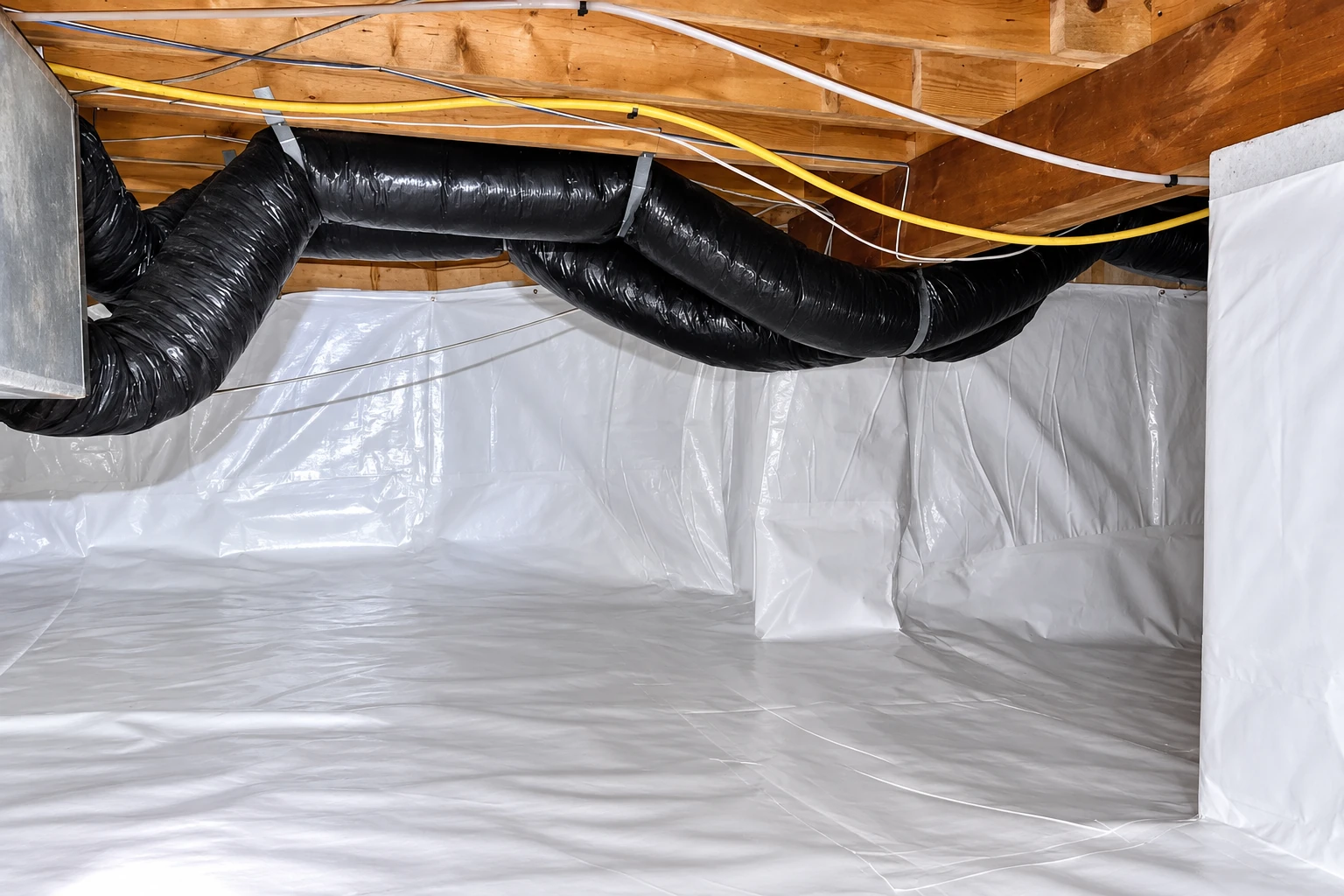
A crawl space vapor barrier in Altoona is a sheet of plastic laid over the bare dirt under your house, and when it's put down well it helps hold back the moisture and soil gases, radon among them, that rise out of the ground.
Most calls I get about this start with cold floors, a musty smell or a crawl space that looks damp every time somebody opens it up. The price mostly comes down to how big the floor is and whether there's water to fix before any plastic goes down, and the schedule turns on that same water repair and on whether a permit has to be in place first. If the floor above still runs cold once the ground is covered, crawl space insulation is usually the next thing to look at, and I'll give you a price on both when I come out.
I crawl in and check the ground, the walls, the vents and anything burning fuel down there before I give you a number, because what's under your house decides how the job goes.
If your crawl space is in decent shape, or the fix belongs to another trade, I'll tell you so rather than sell you work that won't do anything for your house.
Pennsylvania's building code requires property owners to get a permit before starting any work, so we check with your local code office and get it in place with you. We're licensed and fully insured.
If there's standing water, we trace where it's coming from and get that fixed before any plastic goes down, because a cover over a wet floor just hides the problem. Then our crew covers the entire floor and carries the sheet up the walls and around the piers so no bare dirt is left at the edges. Where you or a furnace tech will be crawling to reach the equipment, we lay a tougher path so the plastic doesn't get torn up on the first service call. When it's done, I go over the finished work with you, and it's backed by our satisfaction guarantee.
A crawl space cover is one part of our vapor barrier installation work, which handles moisture in other parts of the house too. Air from down below tends to rise and leak out the top of the house, so if your upstairs is drafty, attic air sealing, closing the gaps up there before anything else, is often worth a look while I'm out.
Bare soil gives off moisture all the time, even when it looks dry. A plastic cover over the whole floor helps keep that vapor out of the joists, insulation and air above it.
Warm, humid outside air can turn to condensation once it cools inside a crawl space, and that can lead to rot. It's common across Pennsylvania, so keeping ground moisture down matters here.
Pennsylvania's Department of Environmental Protection says the state has one of the most serious radon problems in the country, with an estimated 40% of tested homes above the EPA's action guideline.
We're based in Altoona and work in Hollidaysburg, Tyrone, Park Forest Village and other cities around them, and most calls come from older homes with cold floors over a dirt crawl space.
Send the form and we'll get back to you within one business day to set a time. I'll come out, look the crawl space over and give you a free estimate with no obligation.
Let us know whether your crawl space has vents, whether you've thought about closing them and whether you've seen standing water, because those answers shape the whole job.
If a furnace or water heater that burns gas or oil sits in the crawl space, tell us up front, since it matters a great deal for how the vents get handled.
If you store things down there, plan to empty the crawl space before the crew arrives, so the plastic can cover the floor completely with nothing left sitting on bare dirt.
These photos show ground covers, wall laps, walkways and insulation layouts that we can talk through with you when we come out to look.
Here's what Altoona homeowners usually ask about vents, water, radon and price before they cover a crawl space floor.
Yes. Federal building guidance says a plastic ground cover should go in whether a crawl space is vented or sealed. That means you can cover the ground now without first deciding what to do about your vents, and still look at sealing the crawl space later if you want to.
It has to come out, and its source has to be found and repaired, according to a Department of Energy guide. Planning that repair as step one keeps the water from coming back under the plastic and keeps moisture down. Sometimes the source is simple and sometimes it isn't, and you'll know which once I've looked.
Not by themselves. The same Department of Energy guide warns that closing the vents alone could raise moisture, and it could be deadly if naturally vented fuel-burning equipment sits down there. Sealing a crawl space is a full conversion with more to it than covering the openings, and I'll go over what yours would take.
It helps. A well-installed ground cover helps minimize soil gases like radon, but it isn't radon testing or mitigation. If you want either one, look for a person or firm in the state's radon certification program, which covers testing, mitigation and lab work.
There's no set price, because it depends on what's under your house. Floor size, how much has to be cleared out, any water repair, how many piers and walls the plastic wraps, a walkway to the furnace and whether you go on to a full sealed crawl space all change the number. I'll give you yours after I've looked.
Call (814) 369-6056 weekdays until 10 PM or weekends from 6 AM, or send the form, so you can reach us after work.