Attics with thin or old insulation
I count the inches already up there and check what shape they're in, because a thin, clean layer can usually be topped up while a damp or dirty one can't.
Cold floors, drafty rooms or a power bill that keeps climbing? We seal the leaks first, then insulate where it helps most.
Home insulation in Altoona, PA means sealing the air leaks and then insulating the attic, floors, crawl space and basement, so your house keeps the heat you're paying for and the cold floors and drafty rooms ease up.
Most calls I get come from older homes with cold floors, a drafty back room or a room over the garage that's hot upstairs in summer and cold all winter. The price turns on how much of the house needs work, whether old or soaked material has to come out, how many gaps need sealing and whether foam or loose fill fits the space. The schedule mostly depends on how easy the attic is to get into and whether anything has to be fixed before we insulate. I climb up and look at all of it before I give you a number, so the estimate fits your house and isn't a guess.
Leaks get sealed and wet spots get dealt with before any insulation goes in, because insulation laid over open gaps or a damp wall doesn't do what you paid for.
I come out myself, climb into the attic and crawl space and check the basement, so the plan is built on what's actually there and not on a guess over the phone.
If a spot isn't worth insulating, or the fix isn't ours to do, I'll say so, because I'd rather lose that part of the job than sell you work you don't need.
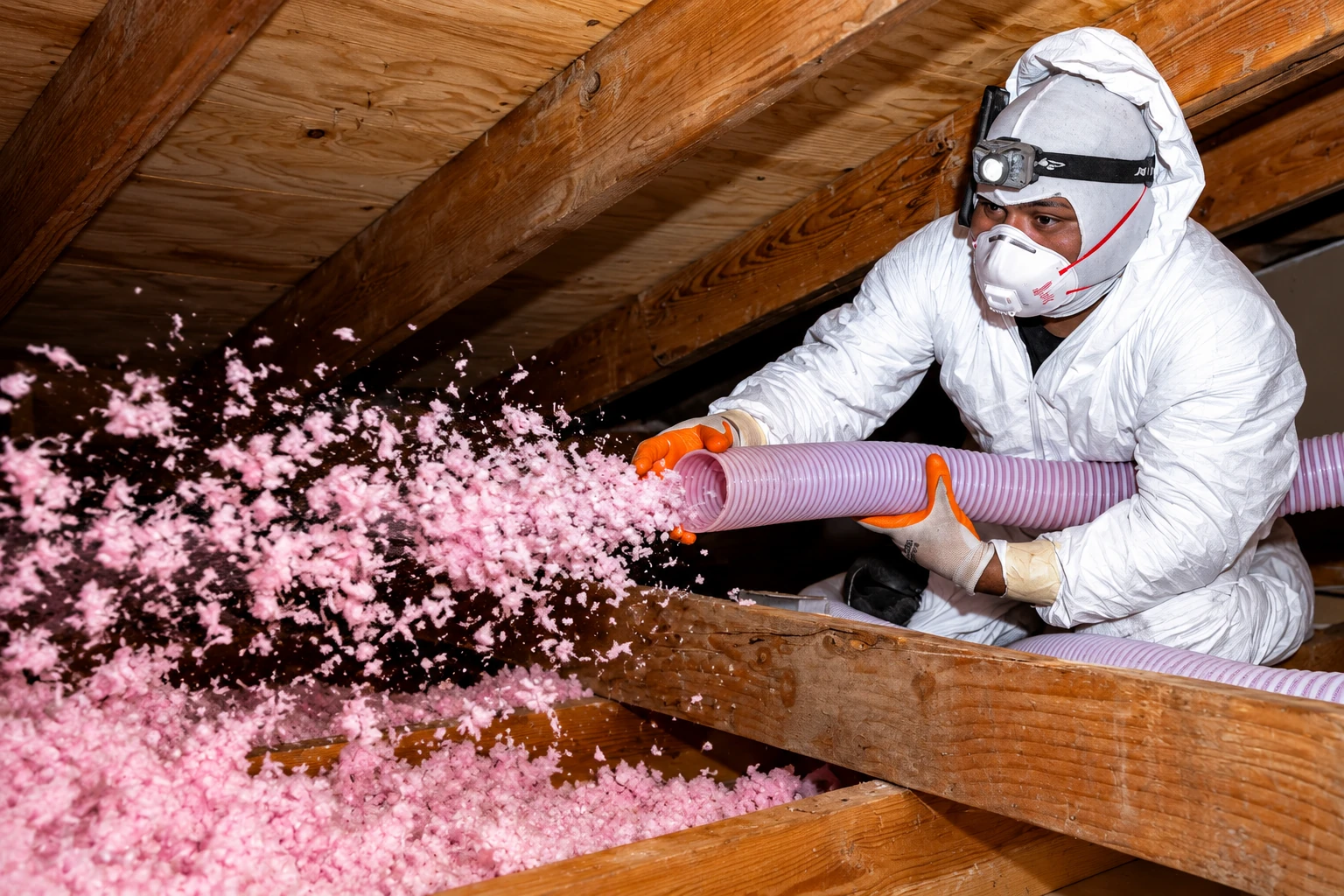
For a whole house, I look at the attic, floors, crawl space and basement together, then we lay out which spots to do first so your money goes where it helps most. On the job, our crew starts with air sealing, closing the gaps around can lights, pipes and the attic hatch, because insulation laid over a draft just keeps fighting it. In the attic we keep the eave vents clear so the attic can still breathe, and we carry the depth all the way out to the edges, where it's usually thinnest. Sealing the gaps and topping up with blown-in insulation, loose fill blown in through a hose, usually gets you more for the money than foam, which costs more because it seals air while it insulates, so foam is what I'd pick when your ductwork lives up there.
If what's up there now is soaked, matted or full of droppings, insulation removal comes first, because new material over a bad layer keeps the problem in your house. Cold floors usually trace back to what's underneath them, so crawl space insulation is often part of a whole-house plan, and we take it on by itself when that's the only spot that needs work.
I count the inches already up there and check what shape they're in, because a thin, clean layer can usually be topped up while a damp or dirty one can't.
Blanket insulation, the rolls and batts most homes already have, fits between the floor joists from below, so we can warm up the floor without touching your finished flooring.
The rim joist, the band of framing that sits on top of the foundation wall, is often leaky in older basements, so we seal it and insulate it while we're down there.
A room over the garage, or one that's hot upstairs in summer, usually has air leaks to go with its thin insulation, so we find and close those before adding anything.
Send the form and we'll get back to you within one business day to set a time. I come out, look over the house and give you a free estimate, with no obligation to go ahead.
We're based in Altoona and also work in Hollidaysburg, Tyrone, Park Forest Village and other cities around them, so the same look-first estimate goes wherever your house is.
Our crew does the install, then I walk through the finished work with you, so you see the sealed gaps and the even coverage for yourself.
We pick up Monday through Friday from 8 AM to 10 PM and on weekends from 6 AM to 9 PM, so you can call after work or on a Saturday.
Example photos of blown-in, batt and foam insulation in attics, crawl spaces and basements, to help you point at what you want to talk over.
Straight answers to what people ask first about insulating an older house, from cost and permits to old attic insulation.
Insulation in Altoona usually costs about $1 to $5 per square foot, and that's the going range around here, not our price. Where your house falls depends on the type of insulation, how much area needs it and whether old material has to come out or gaps need sealing first. I'll give you your own number after I've looked.
It can, because Pennsylvania's building code requires the owner, or someone they authorize, to get a building permit before any construction or building work begins. Rules differ between cities, boroughs and townships, so we check with the local code office before we start and talk it over with you. If your job needs a permit, we work with you to have it in place first.
Pennsylvania has no state license for most construction contractors, but most home improvement contractors must register with the Pennsylvania Attorney General's Office, carry minimum insurance and use contracts that meet the state's consumer protection law. Some municipalities set their own contractor rules, and only the City of Altoona can tell you what applies there, so ask the city. We're licensed and fully insured.
Leave it alone, because the EPA advises assuming vermiculite, the pebbly gray-brown loose fill in some older attics, may contain asbestos and recommends not disturbing it. If you choose removal, it should go to a trained, accredited asbestos abatement contractor separate from whoever assessed it, and Pennsylvania certifies the contractors who do that work. If I see it, I'll tell you plainly.
The Department of Energy puts the average at up to 15% off heating and cooling costs, or up to 11% off total energy costs, when a house gets insulation along with air sealing. It also warns that insulation money can be wasted if the gaps aren't sealed first, so check that every bid you compare seals before it insulates.
An ENERGY STAR do-it-yourself guide puts attic sealing and insulating at a day or two when the attic is easy to get around in. Older attics can need fixes first, because damp insulation can mean a roof leak, some bath or dryer vents blow into the attic, and wiring from before 1930 can be knob and tube, a fire hazard against insulation.
Call (814) 369-6056 or send the form with your home's age and how you reach the attic, so I come ready for your house.