Older homes with cold floors
When the floor over the basement is cold, the leak is often along the top of the foundation wall, and closed-cell foam seals and insulates that edge in one layer.
Cold floors and a draft coming off the top of the basement wall? We seal and insulate that spot with one layer of foam.
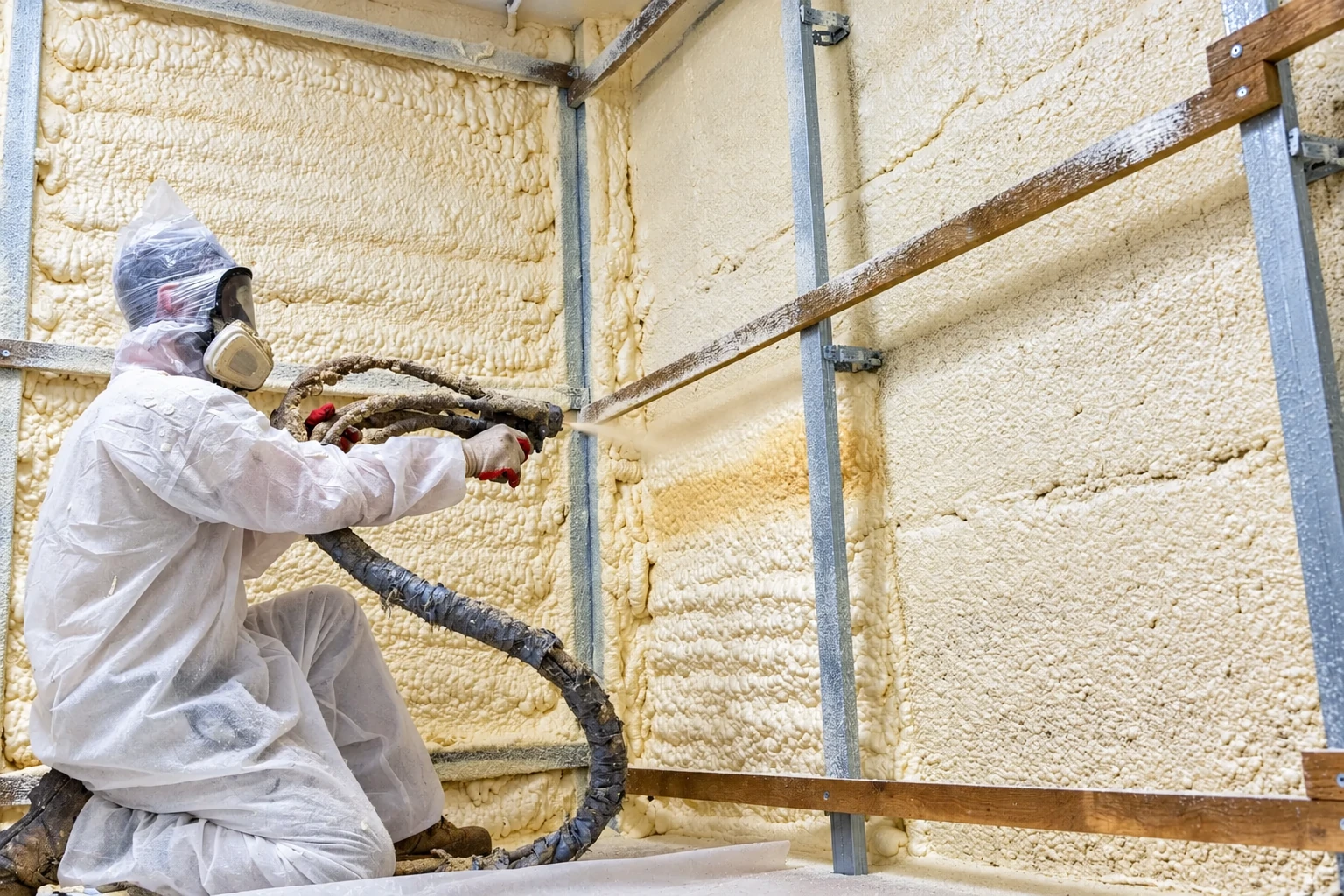
Closed-cell foam insulation is a dense, rigid spray foam. In Altoona homes we use it where air, heat and moisture all have to be stopped in one layer, most often along the top of the basement wall. It's rated at R-6 per inch, R-value being how well insulation slows heat, and at the thickness it's usually sprayed, damp air can barely get through it.
Most foam calls start with cold floors, a drafty room over the basement or a heating bill that keeps climbing. In an older house, the first place to check is where the wood framing meets the top of the foundation. At Heritage Altoona Spray Foam Insulation, the price turns on how much area needs foam, how thick it goes, how hard the spot is to reach and whether old batts or soaked material have to come out first. The schedule turns on that same prep, on any permit, and on finding a day your household can be out of the house, and the estimate gives you your own number for the job.
We find wet spots and pull out soaked or dirty insulation before any foam goes on, because foam sprayed over a problem hides it and doesn't do what you paid for.
If your house doesn't need foam, or the work isn't ours to do, I'll tell you that plainly rather than sell you a job you don't need.
I come out myself, climb into the basement or attic and see what's there, because what sits behind the old insulation decides what the job really is.
Closed-cell is our pick for the rim joist, the band of framing that sits on top of your basement wall, because the foam there has to stop air and moisture together. That wood gets cold in winter, and fiberglass batts tucked against it still let warm indoor air reach it, which is how condensation and mold get started. A tight seal works there when batts alone don't. I check for wet wood and old batts first. We pull out anything damp or dirty, cover what shouldn't get foam on it, spray the foam on, trim it back and clean up. Where foam goes into a room you live in, we plan for drywall or another covering over it, and I walk the finished work with you.
When moisture isn't the main worry, open-cell foam insulation is the lighter, softer foam I'll often price beside it, so you can compare the two before you decide. For shops, metal buildings and other work spaces, our commercial insulation work covers those buildings, with the same look before we spray.
When the floor over the basement is cold, the leak is often along the top of the foundation wall, and closed-cell foam seals and insulates that edge in one layer.
Insulating the basement walls makes the cold rim joist problem worse, so if you're doing the walls, it's a good time to have us seal the rim joist too.
In most attics, sealing the gaps and topping up loose fill wins on cost, but when your ductwork lives up there, foam that seals air while it insulates usually earns its price.
Some of our calls come from owners of shops and metal buildings, where the same seal against air and moisture matters on bare walls and roof framing.
Send the form and we'll reply within one business day to set a time. I come out, look over the spots you want insulated and give you a free estimate on site, with no obligation.
We're based in Altoona and work in Hollidaysburg, Tyrone, Park Forest Village and the cities around them, so tell us where you are and which rooms feel cold or drafty.
If anyone at home has asthma, allergies or skin trouble, put it on the form, so we can go over the foam's product sheets with you before you decide anything.
Our crew does the install, and I walk through the finished work with you afterward so you see the seal and any covering yourself. The work is backed by our satisfaction guarantee.
These example photos show foam finishes, rim joist layouts and coverings over insulation, so you can point to what you'd like to talk about.
Here's what Altoona homeowners usually ask about cost, leaving the house, health, permits and licensing before they book a foam job.
Across the US, closed-cell spray foam usually costs about $1 to $1.50 per board foot, and a board foot is one square foot of foam one inch thick. That's a national guide for the work, not our price, so your number comes down to how much area your spot has and how deep it needs to go. I'll give you that figure at the estimate.
Yes, plan to be out while we spray, because the EPA's now-archived guidance says people in the home should leave during spraying. Some foam makers recommend 24 hours before residents come back, though it can vary, so ask us how long to stay out with the product we're using. Book other trades for a different day too, since the same guidance says they should leave as well.
It's worth a careful look before you choose foam. The EPA's archived guidance says people with asthma, respiratory allergies, skin conditions or a past reaction to isocyanates, one of the chemicals in spray foam, should carefully review the product information and may want to consider other options. Tell me at the estimate, and we'll go over the product sheets together before you decide.
You may, since Pennsylvania's Uniform Construction Code puts it on the property owner to get a construction or building permit before work starts, and rules differ between cities, boroughs and townships. We check with your local code office first and go over what we learn with you. If your job needs a permit, we work with you to have it in place before any work begins.
Pennsylvania has no state license for most construction contractors, but most home improvement contractors have to register with the state Attorney General's Office and carry minimum insurance. Some municipalities add their own licensing rules that the state doesn't keep records of, so only the city of Altoona can tell you what it asks of contractors working there. We're licensed and fully insured.
There may be if your household income is at or below 200% of the federal poverty guidelines. The Center for Community Action lists Blair County on its 2026 weatherization page, with air sealing like weather stripping among its measures, and an October 2025 county housing list names the Blair County Community Action Program as the contact for low-income and higher-risk residents.
Winter shows where the cold gets in, so call (814) 369-6056 or send the form while the drafts are easy to find.