Heritage Altoona Spray Foam InsulationHeritage Altoona Spray Foam Insulation

Air sealing services in Altoona PA - a house that holds its heat in winter

Drafty rooms, cold floors and a power bill that climbs every winter usually trace back to small leaks we can find and close.

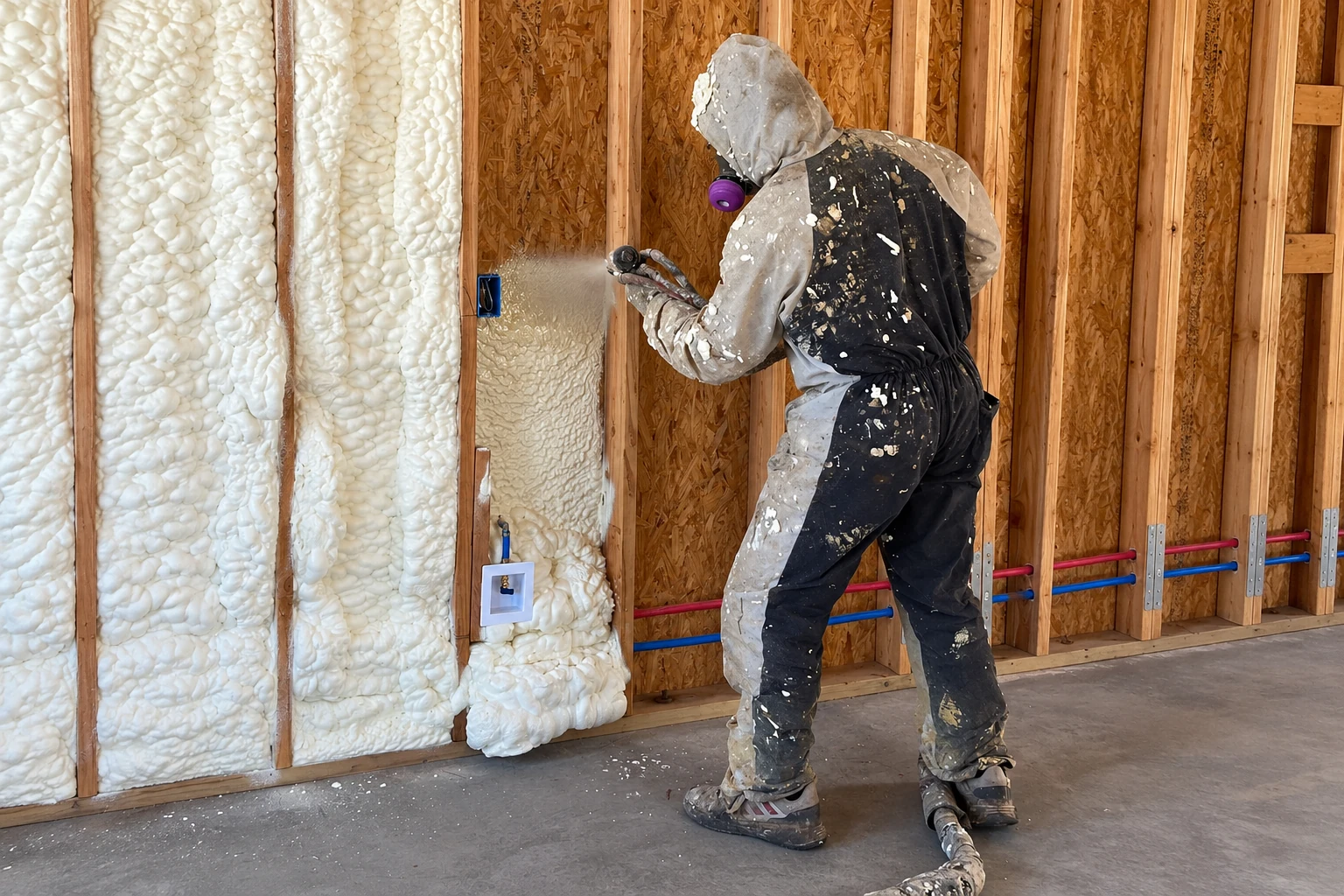
A worker in protective gear sprays open-cell foam into a framed wall beside completed foam-filled cavities.
  • Licensed and fully insured.
  • Free estimates at your property.
  • We reply within 1 business day.

What air sealing does for a drafty house

Air sealing services in Altoona close the gaps where your house leaks air, around door frames, ducts and bath fans and where pipes, vents and wires pass through the outside walls, so less heat slips out and the rooms stop feeling drafty.

Most of the calls I get come from older homes with a drafty bedroom, cold floors or a power bill that keeps creeping up, and the cause is usually a lot of small leaks tucked under the attic insulation where you'd never spot them. What moves the price is how many of those gaps there are, how easy your attic and basement are to move around in and how much insulation has to be pulled back to reach them, and the schedule mostly turns on anything that has to be fixed before sealing makes sense. I give you a figure for your own house once I've been up there and looked. Rules differ between cities, boroughs and townships, so we check with the local code office before we start, and if your job needs a permit we work with you to have it in place before any work begins.

  • I look before I quote

    I come out myself and check the attic and basement before giving you a number, because the leaks that matter are usually the ones you can't see from the hatch.

  • A walk-through when we're done

    Our crew does the sealing, and when they finish I walk through the job with you and show you what got closed, so you aren't guessing what happened up there.

  • Straight answers about what helps

    If sealing won't help your house much, or the problem isn't ours to fix, I'll say so, because I'd rather lose the job than sell you work you don't need.

How we find and close the leaks

I start in the attic, because that's where most leaks hide, under the insulation around pipes, wires, ducts, bath fans and the hatch itself. Our crew pulls the insulation back where it's needed and closes each gap with caulk, foam or weatherstripping, and we take our time on the small ones, since they're easy to miss and they add up. Once the attic is done we turn to the basement, because warm air leaving through the top of the house pulls cold air in from below, and sealing only one end leaves that draft running.

If your basement walls are bare, basement insulation after the sealing keeps that lower floor from staying cold. In the attic, sealing the gaps and topping up loose fill usually does the job for less, but when your ductwork runs up there I lean toward closed-cell foam insulation, a dense foam that seals and insulates at once, because keeping those ducts on the warm side is worth the extra cost.

What we watch for in the attic

Fire blocking around hot flues

Federal attic guidance calls for solid blocking over big holes and open soffits, metal blocking and collars around hot flues, and covers over certain recessed can lights, since foam and caulk shouldn't sit against heat.

Vents left open to breathe

Soffit, ridge and gable vents and combustion air ducts are openings on purpose, so we seal the leaks around them and keep them clear, or moisture starts showing up in the framing.

Problems checked before sealing

Live knob and tube wiring, vermiculite insulation, a leaking roof and bath fans venting into the attic all get looked for first. Some of that isn't ours to fix, and I'll tell you.

Old insulation that's gone bad

If what's up there is soaked or full of droppings, we don't seal it in and bury it, because new work over a bad layer just leaves the problem in place.

Get a free air sealing estimate for your house

Send the form and we'll get back to you within one business day to set a time. I come out, look over your attic and basement, and give you a free estimate with no obligation.

  • Tell us which rooms are drafty

    Note the rooms that run cold, the floors that stay chilly and any spot where you feel air moving, because those point me toward the leaks before I climb up.

  • Know how you get into the attic

    Let us know whether the attic opens from a hatch, a pull-down stair or a closet, and roughly how many inches of insulation are already up there, so I come ready.

  • List your fuel-burning appliances

    Mention a gas furnace, water heater, fireplace or anything else that burns fuel, because those get checked before any sealing starts and I want to know what's there ahead of time.

(814) 369-6056

Questions people ask about air sealing

Here are the questions I hear most from homeowners in Altoona, Hollidaysburg, Tyrone and Park Forest Village about sealing up an older house.

Can I seal the drafts in my house myself?

You can take care of the obvious ones, like a gap around a door frame, with caulk or weatherstripping. What doing it yourself won't reach are the small, hard-to-find leaks under attic insulation, and in an existing house with an insulated attic, those usually call for a professional because they're often the ones behind the drafts.

Is air sealing safe if I have a gas furnace or water heater?

It is, as long as your fuel-burning appliances and the house's fresh air get checked before any sealing starts. An appliance that burns fuel can release dangerous gases like carbon monoxide into the house if it doesn't get enough air. That's why combustion safety and ventilation come first, and why I want to know about those appliances before we start.

Should I air seal before adding attic insulation?

Seal first, then insulate. Air sealing is done before insulating to get the most energy savings, and once new insulation covers a leak, it's hard to find again. If you're planning new attic insulation, schedule the sealing ahead of it, and we'll close the gaps before anything goes over them.

How much does air sealing cost in Altoona?

Across the US, air sealing with caulk, spray foam and weatherstripping usually costs about $500 to $1,500 a job. That's a national range, not an Altoona figure and not our price, so treat it as a rough guide. I'll give you a number for your own house once I've been up in the attic and looked.

What should I check before hiring an air sealing contractor in Altoona?

Make sure they're registered with the Pennsylvania Attorney General's Office, as state law requires of most home improvement contractors, carry insurance and give you a written contract that meets the law's consumer protections. Pennsylvania's building code also has property owners get a building permit before work starts. We're licensed and fully insured, and we check with the local code office first.

Find out where your house is leaking

Call (814) 369-6056 on a cold evening while you can still feel where the drafts come in, since we take calls until 10 PM weekdays.

(814) 369-6056Request an estimate