
Attics where the ductwork lives
If your furnace ducts run through the attic, foam usually earns its higher price, because it seals air and insulates at once around the space those ducts sit in.
Drafty rooms, a hot upstairs or a power bill that keeps climbing? Open-cell foam fills the gaps air leaks through, so your rooms stay comfortable.
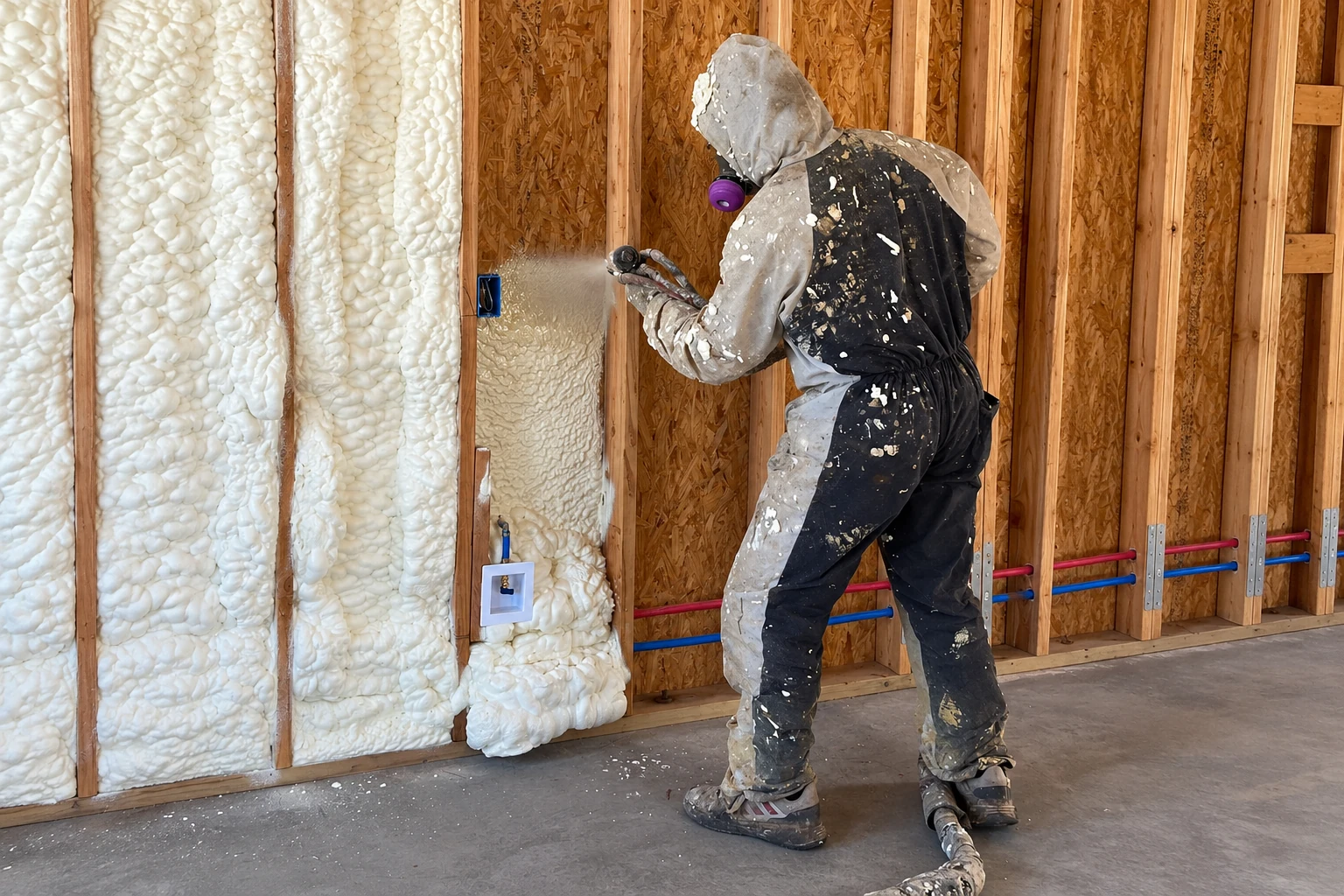
Open-cell foam insulation is a soft spray foam our crew puts into attics, walls and the room over the garage in Altoona, PA, where it swells to fill the gaps and stops air from moving through, though it still lets water vapor pass.
Most calls I get start with drafty rooms, cold floors or a heating bill that's too high in an older house, and often the cause is air slipping through gaps that loose insulation can't close. Your price mostly comes down to how much area we're foaming and how thick, how easy it is to reach, and whether old insulation that's wet or full of droppings has to come out first. The schedule turns on the season, the conditions in the house, when your household can be away and any permit your job needs. I'll give you your own figure once I've been up there and looked.
I come out myself, climb into the attic or crawl space and look over the walls before I price anything, so the estimate fits what's really there, not a guess from the driveway.
Foam sprayed over open leaks, wet framing or soaked old insulation doesn't do what you paid for, so those get dealt with first, or I tell you they aren't ours to fix.
Our crew does the install, and then I walk through the finished work with you, so you see where the foam went and can ask about anything before we leave.
It starts with which foam goes where, because open-cell stops air and costs less than closed-cell, a denser foam that also blocks moisture, but it isn't right for every spot, so I explain the difference plainly before anything gets sprayed. Then we talk timing, since how spray foam turns out depends on the time of year and the temperature and humidity in the house on the day, and we pick a date that suits those and your time away. On install day our crew covers floors and anything nearby, pulls out any old insulation that's soaked or full of droppings so the problem doesn't stay trapped underneath, sprays the foam into the open framing, trims it back where it swells past the studs and cleans up before leaving.
Some calls come from owners of shops and metal buildings, and that's our commercial insulation work, planned around how the building gets used. When cold floors start below the house, we look at the crawl space too, and a crawl space vapor barrier over the dirt may belong in the plan.
If your furnace ducts run through the attic, foam usually earns its higher price, because it seals air and insulates at once around the space those ducts sit in.
That room runs hot in summer and cold in winter because air moves through its floor and walls, and foam fills the odd gaps that loose fill tends to leave open.
Most of our calls come from older houses with drafty rooms and high heating bills, and foam can close the leaks along the framing wherever walls or the attic floor are open to reach.
With no ductwork in the attic, sealing the gaps and topping up blown-in insulation, loose fill sent through a hose, usually does the job for less, and I'll tell you so.
Send the form and we'll get back to you within one business day to set a time. I come out, look over the areas you want insulated and give you a free estimate with no obligation.
List the attic, walls, crawl space or room over the garage you want done, so I come out ready to look at the right spots and measure them.
If someone at home has asthma, allergies or sensitive skin, say so on the form, because it can change whether foam is the right insulation for your house.
Call (814) 369-6056 Monday through Friday from 8 AM to 10 PM, or Saturday and Sunday from 6 AM to 9 PM, and tell us what you're seeing in the house.
These example photos show foam, blown-in and other insulation finishes in attics and walls, so you can point to what you have in mind.
These are the questions Altoona homeowners ask most about open-cell foam, and we get the same ones in Hollidaysburg, Tyrone and Park Forest Village.
Plan on at least 24 hours out of the house, because staff at the U.S. Consumer Product Safety Commission advise residents to leave for at least that long when spray foam goes in. Kids and pets go with you. Line up a place to stay and a return date, and we'll set the install day around them.
Read the product information carefully before you decide, because consumer safety staff single out people with asthma, respiratory allergies, skin conditions or an earlier reaction to isocyanates, chemicals used to make spray foam. If that review points away from foam, a different insulation is the better choice for your house. Tell me about health concerns at the estimate and we'll weigh it together.
Installed open-cell spray foam usually costs about $0.90 to $1.25 per board foot across the US, and a board foot is one square foot of foam an inch thick. That's the going range nationally, not our quote. Your price depends on how many areas we're foaming and how deep, so I measure when I come out to look.
The local code office decides, so we check before we start and tell you what we learn, because rules vary from place to place. Pennsylvania's code puts it on the owner, or someone they authorize, to get a building permit before construction work begins, and nearly all municipalities enforce it locally. If your job needs one, we'll work with you to get it in place first.
Most home improvement contractors have to register with the Pennsylvania Attorney General's Office, carry minimum insurance and use contracts that meet the state's consumer protection rules. The state has no license for most construction contractors, but some municipalities add their own rules, so ask the city where your work will happen. We're licensed and fully insured.
Yes, open-cell foam is considered combustible, and so is closed-cell, because both are made from organic materials. Switching from one foam to the other doesn't change that. It's one more thing we talk through at the estimate, along with where foam makes sense in your house and where a different insulation would serve you better.
Calling early lets us pick an install day that suits the weather and your time away, and the work is backed by our satisfaction guarantee.